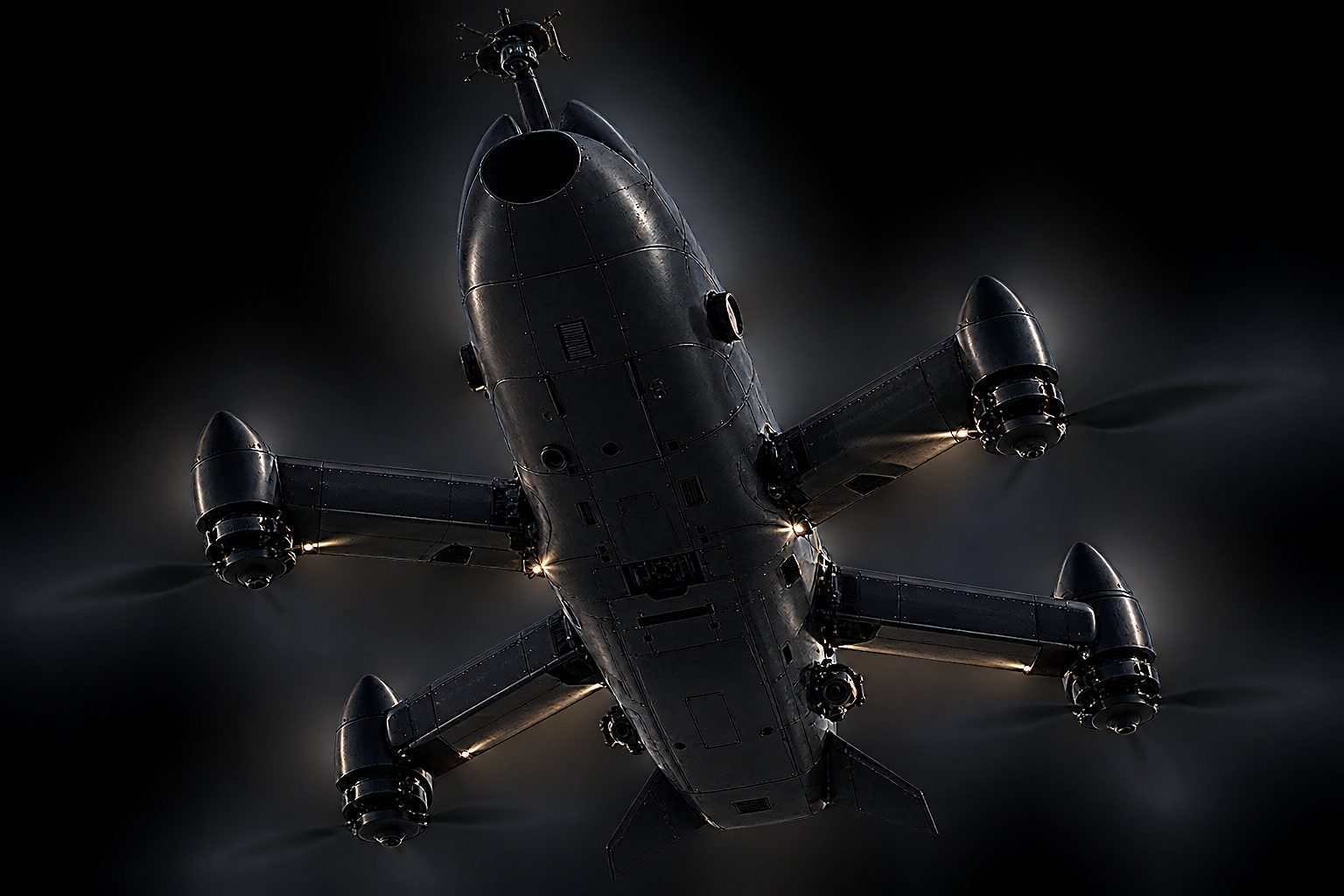
Layered autonomous defence for the drone-defined battlefield.
AI-commanded interceptors that win the exchange today's air defence loses, built on platforms already proven in combat.
AI-commanded interceptors that win the exchange today's air defence loses, built on platforms already proven in combat.
Autonomous interceptors that win the engagement at machine speed.
Built on systems already validated in the field, so they reach the field faster.
A $2K-$8K interceptor does the job of a $1M+ missile.
Greater Robotics is a counter-drone company that builds AI-commanded interceptors for the FPV drones and loitering munitions reshaping modern warfare, the mass-produced threats that conventional air defence cannot afford to answer one for one. It is low-cost counter-drone and counter-UAS (C-UAS) capability built for the drone-defined battlefield.
Rather than start from a clean sheet, Greater Robotics upgrades combat-proven Ukrainian platforms. Systems reach the field and earn their validation in months, not years.
FPV drones and loitering munitions have rewritten the economics and the tempo of the battlefield.
NATO rearmament and rapid-procurement programs are accelerating demand for scalable C-UAS at national scale.
3D-printed airframes, commercial sensors and open autonomy stacks have collapsed the barrier to building capability.
A $25K threat draws a $1M+ response. No defender wins that math, and modern air defence is structurally on the wrong side of it.
Resource drain. Gaps in coverage. Rising risk. Greater Robotics is built to flip the ratio, to make the cost of attacking exceed the cost of stopping it.
*Target unit cost, in development. Bar length proportional to logarithmic cost.
Counter-UAS, also called counter-drone or anti-drone defence, is protection against the FPV drones and loitering munitions reshaping modern warfare, the mass-produced threats that conventional air defence cannot afford to answer one for one. Greater Robotics builds AI-commanded interceptors purpose-built for this threat.
Yes. Greater Robotics is a counter-drone company building AI-commanded, low-cost counter-drone and counter-UAS interceptors. The goal is drone threat protection that flips the exchange ratio, so the cost of attacking exceeds the cost of stopping it.
Swarms are the core problem. Mass-produced FPV drones and loitering munitions are cheap enough to send in numbers, and a defence that answers each one with a million-dollar missile runs out of money before it runs out of targets. A low-cost, AI-commanded interceptor is built for counter-swarm economics, matching cheap threats with an affordable answer at machine speed.
Counter-drone and counter-UAS systems protect allied military forces and the sites most exposed to drone attack, from mobile units and forward operating bases on the front line to fixed sites and critical infrastructure. Anywhere cheap drones can reach, low-cost drone defence is needed to answer them.
A $25K threat draws a $1M+ response, and no defender wins that math. Conventional interceptor rounds run from $50K for an Iron Dome Tamir up to $4M for a Patriot PAC-3 MSE, against an aerial threat that can cost around $35K. Modern air defence is structurally on the wrong side of that ratio.
A Patriot PAC-3 MSE is $4M and a NASAMS round is $1M, while Greater Robotics' interceptor targets a $2K $8K unit cost (in development). Greater Robotics is built to flip the ratio, to make the cost of attacking exceed the cost of stopping it.
Greater Robotics builds AI-commanded interceptors for the FPV drones and loitering munitions reshaping modern warfare. Rather than start from a clean sheet, Greater Robotics upgrades combat-proven Ukrainian platforms, so systems reach the field and earn their validation in months, not years.
Three curves meet at once. War has changed: FPV drones and loitering munitions have rewritten the economics and tempo of the battlefield. Procurement has changed: NATO rearmament and rapid-procurement programs are accelerating demand at national scale. Manufacturing has changed: 3D-printed airframes, commercial sensors and open autonomy stacks have collapsed the barrier to building capability.